»
Showing posts with label Panoramic. Show all posts

Monday, June 1, 2009

Fifty Pilot Whales Beach Themselves in Kommetjie

Whales beach in Kommetjie, Cape Town, South Africa.  Sitting with them.

On Saturday morning, I received this text message from Sean: "Dude apparently 20 whales have beached at kommetjie and they are looking for volunteers to help are you keen to go?"

The answer was yes, and I set about finding more information online. There was one article up already, citing that it was actually around 47 and that more were coming ashore. It was now around 11am, and they had beached just before sunrise at about 7:30am. I saw that one had already died, and that the National Sea Rescue Institute was now inviting people with wet suits to come help them back into the water. Since it was a cold day, I set about getting some warm clothes along with my camera, and ran to meet up with my ride.

We stopped on the way and grabbed wet suits from the diving trailer, and then quickly realized that half of Cape Town was driving there to see the whales. Equipped with a long time Capetonian and GPS unit, we found a bit longer and mountainous, albeit much faster and less congested path to Kommetjie. Score.

When we arrived, I realized how spread out the problem was. There were whales all up and down the beach, each with a group of 3-7 people sitting with them. We headed down to the site, and met up with some friends that had already been there for a few hours. It felt like a disaster zone, with people running around with buckets, and volunteers passing out blankets, food, and drinks for those that had been there a long time. The beach was littered with emergency vehicles, everyone from the neighbourhood watch and the local police to sea rescue and disaster management.

Whales beach in Kommetjie, Cape Town, South Africa.  It was like triage, whales all over.
It was like triage. Whales all over.

Whales beach in Kommetjie, Cape Town, South Africa.  Handing out towels.
The towel lady. That's just what I called her, though.

Whales beach in Kommetjie, Cape Town, South Africa.  Rescuers
They were getting ready to turn the whale upright.

Whales beach in Kommetjie, Cape Town, South Africa.  Rescue Workers.
One whale was already dead when we arrived.

And despite all these officials and being several hours into this ordeal, there was very little organization or instruction for the people that were there to help. After taking some photos, I ditched my camera and clothes when I was asked to help pour water. I shuttled between about ten whales dumping water on them, especially on the dorsal fin to keep it cool. I felt a few, and they were getting very warm. The challenge is that not many people knew how to best take care of the whales, and there was not much direction coming from the officials on the beach. Generally, they were keeping the whales comfortable and keeping them upright so as not to rest them on their side organs or their side fins.

Whales beach in Kommetjie, Cape Town, South Africa.  Pouring water on one.
Keeping this one comfortable. Note the water bucket.

Whales beach in Kommetjie, Cape Town, South Africa.  Pilot whale close up

So.... I continued with my bucket operations. I asked if there was a plan, and got wild responses like, "They are calling in the navy to help. Whether it be a helicopter or boats or what not, we're not sure, but I hope someone comes." This came from a man that was busy digging sand from the sides of a whale, while splashing water on it and attempting to keep it upright as it rolled. I asked someone else and they remarked, "They are supposedly bringing in some trucks to transport them via road to the bay in Simon's Town near the naval base." I looked around as not much else changed. I wondered why nobody was walking around giving directions, why I hadn't heard anything over the loud speakers on the emergency vehicles, or why nobody seemed to know the plan.

Whales beach in Kommetjie, Cape Town, South Africa. Panorama of Spectators.
Lots of spectators flocked to watch.

At this point, I saw a few people trying to move one. I had already heard that any whales that were pushed back to the ocean were turning around and swimming right back in, but also heard that some had gotten back out. They were likely going to die on the beach, so why not try? We sat with one for about 45 minutes as we used periodic waves to move it further into the water. It was about 12-15 feet long, and probably weighed about a ton or more. Let me tell you, although it probably can be assumed, pushing a whale is hard work. It gets very tiring. For the whale as well.

We did it though, and managed to get this one into deeper water. Donning our wet suits in the icy water, we walked her out into deeper water, as far as we could. We struggled to keep her oriented toward the ocean, but she was turning back for the beach, partly because of the current. The waves were crashing pretty hard and it felt like she wouldn't get very far without be guided out past the waves. Yet this quickly becomes a dangerous ordeal when you're swimming with a stressed whale in the big waves. I was getting these huge waves crashing into me while I held onto her, getting thrown a few times and swimming back to her dorsal fin. And eventually I realized that this was becoming more dangerous than I was comfortable with, and the prospect of having a sideways whale tossed into me by the huge waves wasn't one I was ready to contend with. To complicate things, the tide was pulling me further out, so I decided that I'd go in. It wasn't worth it to risk the lives of five volunteers for a whale that was turning to rebeach anyway.

Whales beach in Kommetjie, Cape Town, South Africa.  Swimming one of the whales out.
A few volunteers swimming with one of the pilot whales.
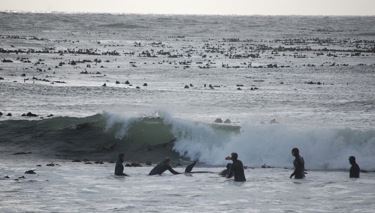
Whales beach in Kommetjie, Cape Town, South Africa.  About to get hit by a big wave.
The breaking waves were pretty dangerous.

I swam back, and later found out that some people made bigger risks earlier in the day. One person needed to be rescued from a near drowning in the surf, another suffered either a broken leg or a fractured knee (or they were different people), and a third may have had broken ribs from being pinned under a rolling whale. So, I kept my safe distance while sitting with them, and decided not to swim out too far. Pushing them out was seemingly futile anyway, since any that were returned to sea were rebeaching a bit further or swimming onto the rocks even further down, causing more problems like cuts and lacerations.

Whales beach in Kommetjie, Cape Town, South Africa.  Close up of one of the pilot whales.
I think this is the one we were sitting with.

Whales beach in Kommetjie, Cape Town, South Africa.
Working with the whale on her own.

The general feeling was, "What must we do?". Despite interspersed rumors of some getting back to the ocean, most of these 55 were either still on the beach, dead already, or much further down on the rocks with other volunteers struggling to free them. And as they became increasingly stressed and resistant, a few started finning and sent volunteers running as it thrashed around in the water. Perhaps it was presumptuous of us to assume that they wanted to live? I'm not sure.

Whales beach in Kommetjie, Cape Town, South Africa.  Not sure what to do.
What to do?

Whales beach in Kommetjie, Cape Town, South Africa.  Standing clear of a fighting whale.
This one was fighting quiet furiously once it was in the water.
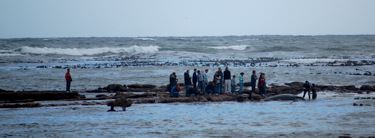
Whales beach in Kommetjie, Cape Town, South Africa. Whale swims into the rocks.
Down the beach, on the rocks.

It was at this point that I stood next to a woman with a walkie talkie. I heard the instruction that all officials were to meet by the vehicles to make a human shield, removing people from the beach so they could all be euthanized. I went to my friends, still working with a whale, and said this was their last chance to send it out. I watched as officials told volunteers to now leave, give up on the whale that some of them had been sitting with for hours because it was not possible anymore to save them. Volunteers in turn were getting frustrated and emotional with the lack of coordinated response and direction, and refused to leave the whale. "This is a public beach, this isn't your whale, and we're still willing to try. You have no right to kill it." Indeed, many were getting stressed and tired, others seemed active and alert... yet it seemed very few people knew much about the whales or their chances. I didn't, for sure, so who do you believe? Emotions were running high.

Whales beach in Kommetjie, Cape Town, South Africa. Police come to close the beach.
More police coming to clear the beach.

Whales beach in Kommetjie, Cape Town, South Africa. SAPS Police Diving Unit
Making a plan, just before they told everyone it was closed.

Whales beach in Kommetjie, Cape Town, South Africa.
The rest of the officials meet before euthanizing.
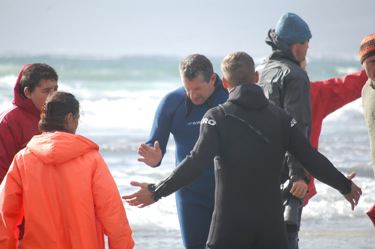
Whales beach in Kommetjie, Cape Town, South Africa.  Arguing with an official.
Arguing once the man in the blue told them to leave.
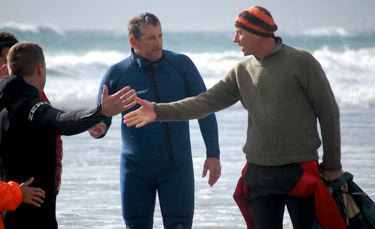
Whales beach in Kommetjie, Cape Town, South Africa.  Arguing with an official.
More fighting, pointing at the whale in the sand.

Whales beach in Kommetjie, Cape Town, South Africa.  Last effort to save one of the whales.
Last ditch effort for this one. Calling people to help push.

I asked a police officer, he said, "The beach is officially closed." To me, this sounded like, "Boy, we really screwed this up big time, and since we're police, we are taking control of this scene and telling you to leave so we can shoot them all." It probably also meant, "We've been told that all that the rescue efforts have failed, and it's too late". Maybe both. I'm no expert, but the whales weren't very large, and I've seen how Cape Town responds to fires, with helicopters galore, and I also know how they can really screw things up as well. It seems to me that they weren't prepared, even the ones that were tasked with marine protection. There should have been boats involved, there should have been either trained professionals, more instruction, or no request for the public to come help. But... there wasn't, and the situation was regrettable. So, we complied and left.

I read another account from a volunteer online, and it seems things got very hectic after we left. Many volunteers tried desperately to free the remaining whales as the police started clearing the beach. Shortly thereafter, a police gunman with a rife, flanked by other officials, moved from whale to whale and put a bullet into each one to euthanize it. It was very sad to hear, and frustrating at how insane things got. Volunteers were still there, and officials are now recommending people that were disturbed by what happened to seek counselling. Should have thought of that before you didn't clear the beach and started killing whales.

All of this happened during the day. In the evening, I spent a lot of time online with friends trying to figure out all the questions I had from the day. Can whale rescue be successful? What was happening physiologically to them on the beach? How should we have been taking care of them? What could have been done better? Why did they beach all at once? Is it common?

First and foremost, pilot whales seem to beach pretty often. A few years ago Australia saw 140 beach at once on their shores, and were somewhat successful getting about 40 back out. I doubt very much that it was the result of navy sonar operations or global warming. In fact, the first recorded stranding in South Africa happened on the same beach in 1928, with 108 whales coming ashore. In that instance, whales that were towed deeper also rebeached, so even their behavior has happened before. Beachings have happened in other places of the world and other parts of South Africa since. So... pilot whales have a tendency to do this.

Why do they beach? No definitive cause has been identified, but the best guess is that they follow a leader onto the beach. These ones are also called false killer whales, since they are smaller relatives and travel in pods of many dozens, following a leader. If she is ill, confused, dying, or whatever else and heads for shore, they follow. Sorry to say it, but these whales may have received a Darwin Award on Saturday. The bottom line: these things happen, and a number of things could have been done differently. Beyond this, I've had lots of conversations and arguments with people about what could have been done, and I'm frankly tired of talking about it. The numbers are sketchy, and news reports keep changing on how many lived, beached, and died. It seems now that 44 were euthanized on the beach, and another ten or so died during rescue attempts. They probably didn't have a very good chance of survival once they came ashore in the first place.

I'd like to focus on the time I actually spent with them, rather than the outcome though. It was a very unique experience to sit with a whale. I sat with this one outside of the context of an aquarium, or some type of zoo... but rather in the wild, sitting with it, making my best guesses as how to support it and keep it well. I am glad I was at least able to help try.

It ended up becoming international news. Here are some articles: BBC News UK | Telegraph | Reuters | Associated Press
All photographs © Shaun Aukland

Thursday, May 28, 2009

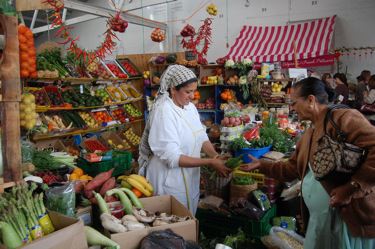
The Old Biscuit Mill Market

Just down the road from Observatory, there is a Saturday market very similar to Madison's Farmer's Market near the capitol. I can't decide which one I like more though. The market in Madison mostly has food, juices, and snacks. Yet it is next to the state capitol building, which makes it remarkable. If you took away the location, I'm sure the Farmer's Market would be far less attractive.

A vendor at Woodstock's Old Biscuit Mill Market

I recently visited Cape Town's Old Biscuit Mill Market, which is set on the grounds of an old converted... biscuit mill, surprisingly enough. The goods that they have are far more varied than I was accustomed to. The essential produce, flowers, and popcorn were around. But beyond this there were stands of smoothies, quiches, cheeses, ostrich and lamb burgers, crepes, fancy beer, brats, dried South African meats (biltong and droewors), pastries, cupcakes, curry, and more. As a reminder, I love food and trying things, so I was getting more and more overwhelmed as I walked around and saw all my options. "I want everything!"

Old Biscuit Mill Market Panorama in Woodstock, Cape Town, South Africa
Seating space and vendors.

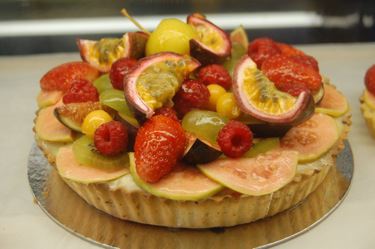
Fruit pie at the Old Biscuit Mill
I'd eat it. I didn't though. :-(

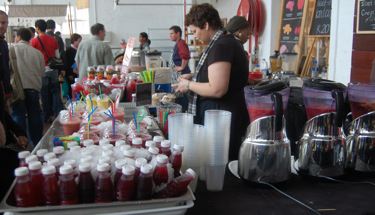
The smoothie lady at Old Biscuit Mill Market
The 'ol smoothie lady. That's just what we call her.

We had to decide on something though, so I put Anneli in charge. She chose for me a lamb burger with mild chili sauce, rocket lettuce, cucumber, and tsatsiki sauce (on a whole wheat bun, of course). It was delicious!

Cucumbers for making burgers at Old Biscuit Mill
For my burger.

Lamb burger
And yes, it was as good as it looks.

We also had one of the smoothies to top things off. After satisfying the urge to eat everything that I saw, we moved onto the other merchants. There was an art gallery, a bead store, a coffee micropress with loads of bean stockpiles, and an African themed store with shirts and crafts. I bought a shirt.

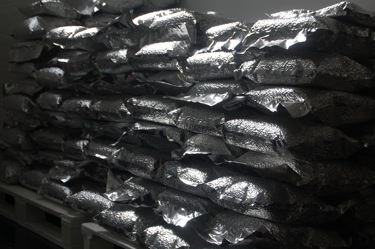
Coffee beans
So many coffee beans!

The fact that this place is situated in a factory complex was really cool though, since all the different areas are more split up and intimate. There are businesses on the upper levels of the balconies, shops down below, and various sculptures and artwork decorating the walkways between buildings and shops. I preferred it being more separated and compartmentalized rather than a big open market in the street... especially since it allowed for permanent shops as well as tables from people that bring in their goods.

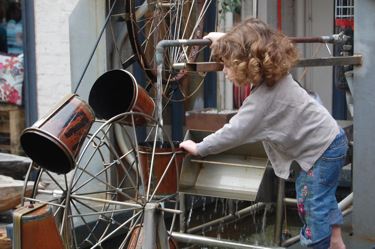
The fountain machine at Old Biscuit Mill Market
A fountain in the courtyard.

Anyway, the place was very neat and I wanted to share. I'm disappointed that I didn't know about it when Erik and Jana were here. If you come visit me though, I'll take you here. And for a much less exciting adventure than actually coming, visit their website. It's horrific, yet whimsical. Lastly, here are some more photos that I took:

Monday, May 18, 2009

Chasing the Beast Storm

Storm at Clifton Storm Chasing

I've mentioned in previous posts that when it storms in Cape Town, they say it storms. Or for example, Steve said, "I promise you that when this weekend is over you can say I'm wrong if you haven't witnessed the most terrifying storm of your life." I love storms, by the way, so this naturally had me intrigued.

The
news sites got a little out of hand, forecasting that this weekend would be a 50-year event. Those that were more cautious simply called it a 'beast' of a storm, but the general consensus was that we'd be witnessing winds of 60 mph and waves ranging between 20 and 30 feet high. You can imagine my glee.

Some friends arranged a storm chasing expedition (another thing I'm always keen for). Saturday morning was supposed to be real bad, and would linger throughout the day. Sunday, however would be the 'creature', 'beast', or 'monster'. Whichever animalistic term you prefer. We arranged the excursion for Saturday afternoon, driving in Steve's Toyota Prado.

Storm at Clifton Storm Chasing
The Chasers. Ready to rock.

The first stop was Sea Point, where the waves were vicious, and you could hardly stand in one spot from the wind. Much of our trip saw winds like this, but we managed to avoid the wild downpours that characterized the rest of the weekend. This was actually great though, since it allowed me to use my Nikon with less fear of it being totally ruined. You'll recall that my underwater camera was lost to the ocean. Here are some shots from Sea Point:

sea-foam.JPG
Tons of sea foam (not the color) blowing onto the walkway!

robs.JPG
Rob was prepared. And loving it.

We moved on and also visited Hout Bay, Kalk Bay, Clifton (very top photo), and Camp's Bay. In terms of the trip, the waves were big, but not as big as they said they'd be. That may be because the brunt of the storm hit on Saturday morning when I was asleep, but that shouldn't matter... Sunday was the prize. However, absolutely nothing happened on Sunday. It just rained in the morning. Bummer.

winding-along.JPG
Winding along the coast, in search of deadly hurricanes.

Although part of that is good, because certain parts of the city are really prone to flooding, especially the townships and other informal housing settlements. You figure that most of the houses are already not build to withstand the extreme weather, and in a huge, expansive area of paved roads and highly concentrated houses (both formal and informal), there is very little exposed soil that can absorb water. So the Cape Flats flood every year, which is very unfortunate, and requires disaster management in the area to be on alert for every big storm.

hout-bay-camp.JPG
Housing near Hout Bay.

But you can't stop the storms, so one will still come. I'm yet to see "the most terrifying storm of my life", but it could still happen while I'm here. Perhaps when the next one hits I'll be in my rain coat with a mini-umbrella hat and a wind speedometer in my hand. I'll blog about it from the top of a mountain. By the way, we ended our trip with hot chocolate. I also got soup because I'm fat. Whatever.

hot-chocolate.JPG
Storm chasing is hard work.

storm-album.jpg

Wednesday, May 13, 2009

Creepin' on Obz

I was sorting though my 5,000-some photos that I've now accumulated since January, and came across a few neat ones from around my neighborhood. So, I decided to share!

The first is a panorama that I took in February, of Arnold Street, right outside my front gate. You can actually see our front wall and gate on the far right of the photo. The "I ♥ Obs" campaign is something that the Neighborhood Association initiated, so you see the logo on lots of business storefronts, car bumpers, and street poles. For me, it just sort of reflects the uniqueness of Observatory. This includes the varied stretch of bars, restaurants, and shops on Lower Main Road, the mix of races, ages, and nationalities that you find all over the area and interacting (including the international students), as well as the jokes that can be tossed around about how sketch it can be, crime and all (not so much a joke, actually). Whatever.  Despite these things, Obz is lekker.

Panorama of Arnold Street in Observatory, Cape Town, South Africa.  I Love Obs I Heart Obz
Outside my house, on Arnold Street.

The next two photos were taken in late April. Friends from Mozambique and I were waiting to leave for a dinner and wine tasting in Stellenbosch, and another great sunset set in as dusk arrived. I like to call these the "cotton candy" sunsets, because both the blues and the pinks look like cotton candy flavors. Or the cotton candy flavored popsicles.  So, the sunset was basically delicious.

Panorama of Lower Main Road Sunset in Observatory Obz, Cape Town, South Africa
Sunset on Lower Main Road.

Lower Main Road Sunset in Observatory Obz, Cape Town, South Africa
Another shot from down further.

Lastly, I really feel like you should see the creepiest piece of graffiti in the city. There is a lot of graffiti in the Southern Suburbs of Cape Town (Obs and the other neighborhoods). Much of it is actually commissioned, and is put in community spaces like parks and building sides... it is quite neat.  It has different themes, some of it is old, some newer.  I don't know when this is from, or what the artist was thinking for that matter...

Creepy Graffiti in Observatory, Cape Town, on Florence Avenue
My creepy graffiti friend.

You'll also find criminals and other skellums (local word for shifty people) that write their names all over. Walls, street poles, sidewalks. It's called tagging, and I don't like it. Especially "Futsek", he's everywhere. I found this shifty, painted old man while walking to the dive shop one morning, as I was headed out to the ocean for the day. He was next to the train tracks, seemingly staring at people and trains that passed. Creep city...

Saturday, May 2, 2009

Winter Creeps In

The past few weeks in Cape Town have ushered in a distinct autumn, and now winter has begun to rear its ugly head. Winter here is characterized by chilly temperatures and lots of wind and rain. The rain is probably the most notable, since it isn't uncommon for rainstorms to go on for several days in the months of June and July. We haven't gotten a ton of rain, but it is raining more often and the temperatures have cooled down. Think late October in WI. And although this is no Wisconsin winter, it might as well be in some cases.

When it is -10ºF at home, my bedroom is usually around 55-60º when I wake up, and I hate it. I despise waking up cold. In Cape Town right now, it may be 55º or 60º outside in the morning, but in a house that is build with no heat or insulation, and windows that are meant to keep out burglars and not drafts of air, I wake up to the same temperatures in my bedroom as I do at home. Or better yet, I get very cold at night and then wrap myself up more, only to wake up in a cold sweat. I've been trying different things recently, like layering and cocooning in a sleeping bag, which seems to help some.

The weather can be very unpredictable though, so it is a challenge to dress in the morning. Not only am I guessing what it will be outside in the sun and the shade, but guessing what the temperature will be on campus, up on the mountain, with a healthy Cape Town wind thrown in. And I usually bring my rain jacket with, because being caught in rain isn't fun and this city has a tendency to quickly destroy anything resembling an umbrella with a gust.

Panorama of University of Cape Town's Upper Campus, Jameson Hall, Cape Town, South Africa
Panorama of UCT's Upper Campus.

winter-uct.JPG

Our swimming pool has shifted from a backyard paradise to an unhealthy, swampy emerald green color. We don't swim in it anymore, obviously, but our maintenance friend likes to still run the filter and add chemicals (maybe for fun, or to save it from ultimate chemical collapse), but we're still paying for the pool electricity and it is unnerving.

University of Cape Town's Rugby Field, Upper Campus, South Africa
Swampy pool.

Life goes on though, as UCT students are now back into the swing of things after their respective Easter vacations. Things are wrapping up at school, and IAPO (department for international students) sent out an email warning students to stay vigilant about crime as they get more used to the city and their surroundings. Despite being more comfortable, crime is still a reality in the city. A few weeks ago, a girl from UW was robbed by two guys who put a knife to her neck on the other side of Obz for only a cell phone. And last weekend, two friends from my African Studies class were kidnapped in a minibus taxi and held for an hour while they withdrew hundreds of dollars from their bank accounts before letting them loose. I say this not to scare you guys or make it seem like I'm in danger, because I don't really think I am, I just don't want to paint an unreal picture of the city. I'm still loving it here, and I'm conscious of what could happen, but... it still happens. Despite that prospect, and what seems like more dreary weather, I am having more fun than ever, and we still have some nice days.

With 52 days left in my program, we've only got about three weeks of classes left. This will leave about a month of free time after classes end, and just a bit less after our final exams. I'm still looking for something to do when that free time arrives, but I have some ideas in mind. There are so many things I'd still like to do before leaving! It is actually approaching really quickly.

Travelling and spending money may prove more difficult now, though, since I have watched the exchange rate of my US Dollars to South African rands literally plummet over the last few weeks. I don't even like checking it anymore, because yesterday it reached a six month low. Ultimately, this just means that everything in the country costs me more for me than it did before. And it's dangerous because I'm used to thinking in my head "Okay, this is R300, which is just under $30." The "ten factor" works quite well and I've been spoiled. It is costing me almost $36 in reality, though. That's like 20% more! Poor me.

rand-exchange-rate.jpg
Exchange Rate:  Down... Down... Down.

Shaun eating a Chipotle burrito.As I get closer to coming home, I'm also having a harder time controlling my cravings for things at home. I'll cut to the chase: The first person to meet me at O'Hare International Airport in Chicago with a carnitas Chipotle burrito in hand will be on my A-list forever. Specifically: burrito, extra rice, extra black beans, Carnitas pork, corn salsa, cheese, and sour cream. Ohhhh, why did I just write that? It sounds so good. I did just fine ignoring this before, but the prospect of eating this in two months is a very tempting prospect. I'm also missing my boyfriend more than ever, and am excited to see my Matthew in a short time. It is particularly difficult since, for the last two winters in Madison, I have had him to warm me up most of the time when I'm cold in the mornings.

Next week I will be continuing my advanced diving certification, this time with a Night Dive at Long Beach on Wednesday. Here's hoping that it isn't freezing, that I will have a flashlight when I'm underwater in the dark, and that I see something cool if I see anything at all. Also, no panic attacks. :-)

Sunday, April 26, 2009

Rioting and Missing Buses and Flights on the Way "Home"

on-the-road-again.jpg
After a great week of swimming, diving, making friends, partying, close wildlife encounters, and carefree relaxation... it was time to leave. Though this could not happen without a nice "Wisconsin Night" first. After hearing the glorious stories of my hometown and my alma mater, my new South African friends would not be let off without becoming honorary Badgers. And so it was:

The South Africans are made honorary Wisconsinites in Mozambique
If you want to be a Badger...

Now, in the early hours of day 10, our 4am shuttle back to Maputo was looming. We decided not to go to sleep, since it would probably have made things worse. Instead, I started to worry that I hadn't taken enough pictures of the resort, so I grabbed my camera and tripod and set about taking some night shots. I was doing long exposures, and each time a photo appeared on my camera I was thrilled with how cool they were turning out. Somehow, in the black darkness of the 3am night, I was exposing photos of the beach and the resort. Here are a few:

Most of our group packed up and started the half hour walk to the shuttle stop. We stayed behind to make some final pasta and assist in loading the trailer full of luggage, while Sean got his truck ready. Running a bit behind from everything, we arrived at the shuttle stop to find no shuttle stopped or waiting. It had left without eight of us, and the now 4:15am prospect of catching up to the fastest thing between Tofo and Maputo seemed daunting. It would appear that "African time" is quite selective in its application. The driver left promptly at 4:00, even as fellow trip mates explained that we were on our way and had tickets.

Speeding down dirt roads in the darkness and crammed into the uncomfortable back cab of Sean's truck, we caught up to the shuttle, only to find they had filled the empty seats immediately and we were now without transport... sort of. We simply remained in our current seats, with five of us sitting in the back of Sean's bakkie (South African word for truck). That's right, folks, we did the 8 hour chicken bus drive that was previously detailed in the back of Sean's bakkie. To make the ride a bit easier, we grabbed sleeping bags, pillows, and an air mattress from the luggage trailer. In retrospect, it was almost certainly more comfortable that the chicken bus drive, so we again sort of messed up, but actually made the right move.

Crammed in Sean's Bakkie for the drive from Tofo to Mozambique
Crammed into the bakkie for the eight hour drive to Maputo.

Fatima's chicken bus was also dethroned as the fastest thing from Tofo to Maputo... we beat it. Back at the backpackers, we spent one final night in the capital city of Mozambique with a dinner and lots of resting. Still a bit overwhelmed by my malaria medicine and feeling nauseous, I went to sleep early.

This would prove helpful when we got up at 6:30 to catch our Greyhound again, this time out of Mozambique, back into South Africa and to Johannesburg to catch our 7pm flights to Cape Town. (Did you get that? Lots of traveling, but it was the last day.) This seemed completely viable and timely until we reached the Moz border.

Rioting at the Lebombo, Mozambique temporary border post.  13 April 2009
The full view of the border post.

So here is the scoop: It is Easter weekend, so there is an inordinate amount of traffic moving through the border. To compensate for this, Mozambican border patrol created a temporary border post about 3km from the actual border. This would seem fine, but as you can see in the photo, it consisted of several green military tents in the middle of nowhere. There were a few computers at each tent, powered by generators, and had ethernet cables running in the dirt to the satellite uplinked embassy truck. Worse yet, there was practically no signage or organization on how this "post" would be functioning. As a result, you had thousands of people attempting to follow directions, get in lines that were explained to be for this or that (Moz exit stamp, South African entry, Miner's, etc.), yet no visible progress.

We stood in line for about an hour and a half before getting to the front of the S. African entry line. It was at this point that a border agent shouted for everyone to create two lines (in Portuguese). What they were for was unclear at the time, but we did as people started to cut in line and find new spots. Eventually lines were disregarded, and people moved to the front of the tent to figure out what we were supposed to do, and to check on why the line had not moved for 45 minutes now. Lines disappeared, and this lead to a large crowd surrounding the tents, searching for information and trying to do the right thing. I was at the very front of this, and watched on as tensions rose, people began yelling, and the seemingly incompetent, outnumbered Mozambican border patrol agents attempted to shout back, tell people to move, and restore order to something that neither they nor the waiting people understood. I felt very uncomfortable as more people pushed to the front, more shouting happened, and people started crossing the tape to tell their story and get information.

At times, it felt like a full out stampede was going to happen as we were pushed from behind, and five unarmed military officers physically pushed our crowd back into place. Suddenly someone pushed too much, about 10 feet from me, as an officer pulled his spiked belt from his pants and started whipping the man. Some chaos ensued as people ran, others that were accidentally struck fought back, and other border people ran to assist or provoke. At the same time the line had stopped completely, and I thought, "This is getting much worse. This is getting out of hand."

And it did. Over the next 45 minutes, I stood near the front of the line, listening to the directions of macho men with military berets shouting at us in Portuguese while more rioting broke out just 15 feet away. This time more people were involved with more belts, more running, and more shouting and crying. And remember my anxiety issues around this time? My hands were shaking and I was trying to calm my breathing as I considered a full out riot with pushing, belting, and running as the prospect of people stealing the passport stamper became more real. Finally, I was next (and first among our group) to get my stamp. I slowly walked up to the woman and patiently waited for the god damn stamp. With passport in hand, I went back to the bus to calm down. Shortly after I left, things got worse with people pushing, and agents fighting back with clubs this time. I watched from the bus as people ran, some holding children. Apparently a woman was being hit and held her baby up to stop the man, but he didn't. Crazy stuff.


I learned that since this post was on Mozambican soil, there were only two South African guards whom could do nothing but watch, their power limited to observer at this temporary post. Further, I learned that this was not the norm, and it was a result of Easter weekend, understaffing, and bad management. At first I thought this was only overwhelming and dangerous because I'm American, but a woman from Durban, South Africa remarked that it was the most dangerous situation she'd been in in her life, and a woman from Joburg said she'd never return to Moz.

The most recent clubbing had lost our trip members their spots in line, and after a cumulative four hours at the post, we gave up as Greyhound called everyone back to the bus. They had found a South African official that was able to give us a siren escort to the actual border, where we'd have people looking out for us. This proved simple and fast, and the ordeal was quickly over. On the road again, it was now become obvious that we'd miss our scheduled flights that evening in Johannesburg.

This is when phone tag began. Six hours before my flight, I knew we wouldn't arrive in time, and opted to call the airline and rebook for the next day. My adventure seemed to be extending, and at the cost of $75, I blame the whip-weilding, belt-pelting border patrol. Over the course of the following hours our group sat on the phone with airlines spending money, approximating driving time, and asking themselves and others if we'd be there in time even to catch the last flight out at 9:00pm. Greyhound, incredible as they are, sent a private shuttle just for us, in hopes of speeding us to the airport separately. It was for free, and I can't say that would ever happen in America.

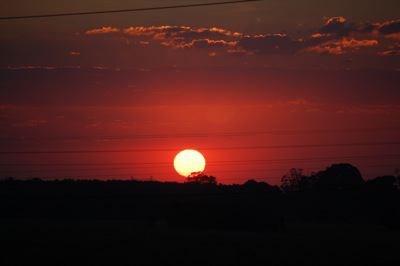
South African Sunset
Sunset as we drove on South African soil.

This new bus sped down the highway toward the airport, but for naught as at least twelve of us missed our flights, with varying penalty fees and the need for new overnight accommodation plans. Luckily, Steve has family in Joburg that picked us up and brought us back to their house. Here, Alexei, Daniel, Steve, and I recharged, each got a shower, and were treated to an awesome braai the night before our new flights. Once again, I thought things had gotten worse but somehow found that our adventure was getting better.

Steve's aunt and uncle provide a great consolation braai
A consolation dinner fit for kings.

Don't worry, this story does actually end. We got up the next morning, were politely shuttled to the airport by Steve's uncle, and finally, successfully caught separate flights back to Cape Town, only to reunite on the other side and head into town. This is about the point that I started thinking, "how in the world do I blog about this trip?" I hope I've done it justice. In the way of souvenirs, I didn't get a whole lot. In fact, I lost a number of Wisconsin shirts in the way of gifts, but I did gain tons of stories, over 700 photos, and some sweet as heck African trousers.

African pants from Mozambique with the guys
Three of the pictured pants are yours truly's.

As you've seen over the last few posts, and as I mentioned originally, my trip to Mozambique was truly an adventure of variety. Most notably as we got around: By planes, Greyhounds, chicken buses, taxis, cars, boats, and a bakkie for good measure.